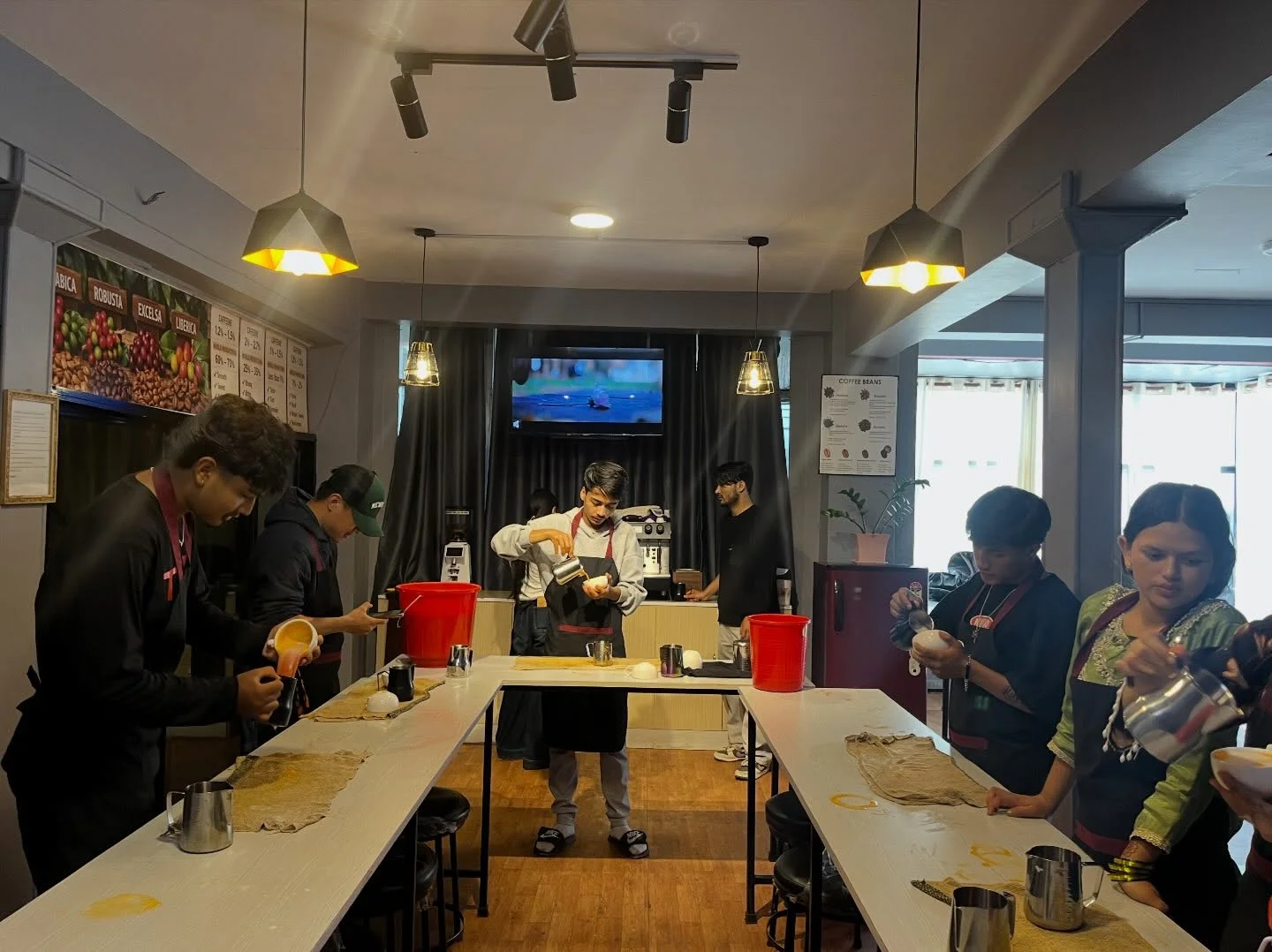
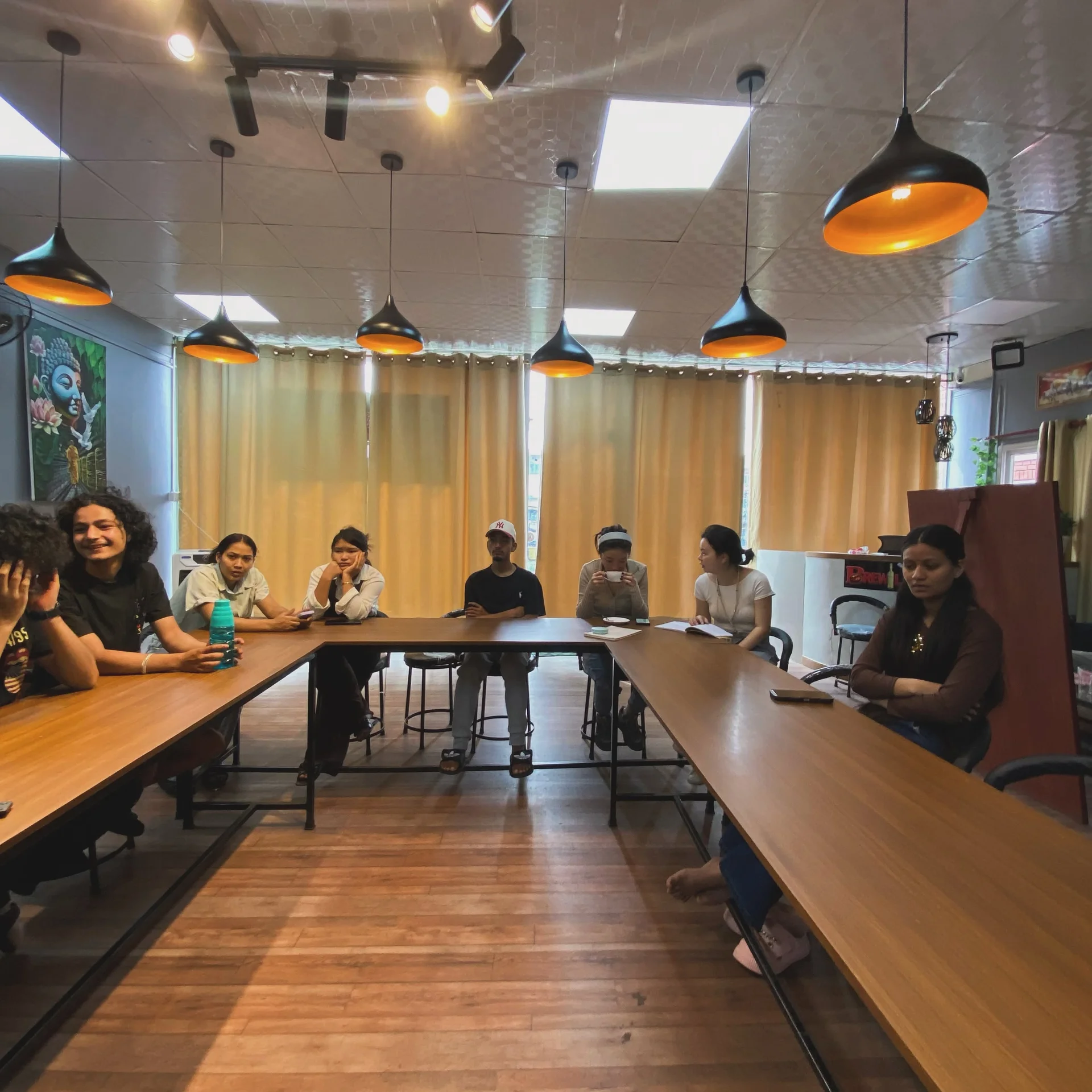
Coffee knowledge is important, but the real learning begins when you place your hands on a commercial espresso machine, steam your first pitcher of milk, adjust a coffee grinder, and prepare drinks during a busy café service.
Imagine reading ten books about swimming.
You might understand the techniques, the breathing patterns, and even the science behind floating—but until you step into the water, you won't truly know how to swim.
Learning to become a barista is no different.
Coffee knowledge is important, but the real learning begins when you place your hands on a commercial espresso machine, steam your first pitcher of milk, adjust a coffee grinder, and prepare drinks during a busy café service.
If you're considering a barista course in Kathmandu, choosing a school that prioritizes practical experience can make a significant difference in your confidence, skills, and career opportunities.
Theory Builds Knowledge, Practical Training Builds Confidence
Understanding coffee origins, roasting, brewing methods, and espresso extraction gives you a strong foundation.
However, cafés hire baristas who can perform—not just explain.
Professional baristas need to:
- Pull consistent espresso shots
- Steam silky microfoam
- Pour latte art
- Adjust coffee grinders
- Operate commercial equipment
- Prepare drinks efficiently
- Deliver excellent customer service
These are skills that develop through regular hands-on practice.
Employers Value Real Café Skills
When café owners interview new baristas, they often look beyond certificates.
They want to know whether you can confidently:
- Operate an espresso machine
- Maintain workflow during busy hours
- Communicate with customers
- Handle café equipment safely
- Prepare drinks consistently
Practical training gives you experience that employers can see from your performance.
Mistakes Become Valuable Lessons
Every beginner makes mistakes.
You might:
- Over-extract an espresso
- Burn the milk
- Pour uneven latte art
- Grind coffee too finely
- Forget to purge the steam wand
These moments aren't failures—they're part of becoming a skilled barista.
In a practical learning environment, experienced trainers guide you through these challenges so you understand how to correct them and improve with every cup.
Speed Comes Through Repetition
Knowing the recipe for a cappuccino is one thing.
Preparing five cappuccinos, three lattes, two Americanos, and a Flat White during a busy café rush is another.
Hands-on training develops:
- Speed
- Accuracy
- Consistency
- Time management
- Confidence under pressure
These are the qualities cafés expect from professional baristas.
Professional Equipment Makes a Difference
Learning on commercial café equipment prepares you for real working environments.
Practical training introduces students to:
- Commercial espresso machines
- Professional coffee grinders
- Steam wands
- Milk pitchers
- Tampers
- Coffee scales
- Café workflow
Training with industry-standard equipment reduces the learning curve when you start your first job.
Customer Service Is Learned Through Experience
Great coffee alone isn't enough.
Professional baristas also create memorable customer experiences.
Practical training helps students develop:
- Communication skills
- Professional etiquette
- Teamwork
- Problem-solving
- Confidence when interacting with customers
These soft skills are just as valuable as technical coffee knowledge.
Why Practice Improves Latte Art
Watching videos about latte art can be inspiring.
Creating smooth hearts, tulips, and rosettas requires muscle memory built through repeated practice.
Every pitcher of milk improves:
- Pouring control
- Microfoam consistency
- Hand coordination
- Cup positioning
- Precision
The more you practice, the more natural latte art becomes.
Learn Through Hands-On Training at Brewliners Barista School
If you're searching for the best barista course in Kathmandu or professional coffee training in Nepal, Brewliners Barista School focuses on practical learning from day one.
With training centers in Balaju, Kathmandu, and Lagankhel, Lalitpur, students spend extensive time working with commercial espresso machines, grinders, and professional café equipment under the guidance of experienced trainers.
Our hands-on curriculum includes:
- Espresso extraction
- Grinder adjustment
- Milk steaming
- Latte art
- Coffee brewing methods
- Machine maintenance
- Café workflow
- Customer service
- Hygiene and safety
- Real-world barista techniques
This practical approach helps students build confidence and prepares them for careers in cafés, hotels, restaurants, and the hospitality industry.
Final Thoughts
Coffee knowledge is important—but practical experience transforms knowledge into professional skill.
The best baristas don't simply know how coffee works; they know how to prepare it consistently, solve problems under pressure, and create memorable experiences for customers.
If your goal is to become a confident, job-ready barista, choose a training program that gives you plenty of time behind the espresso machine—not just in the classroom.
Because in the coffee industry, experience is the ingredient that makes all the difference.
Frequently Asked Questions
Is practical training important for beginner baristas?
Yes. Practical training helps beginners develop essential skills such as espresso extraction, milk steaming, grinder adjustment, latte art, and café workflow through real hands-on experience.
Can I become a barista by watching online videos?
Videos are helpful for learning concepts, but professional barista skills require supervised practice with commercial equipment and real café techniques.
What equipment should I practice on?
Commercial espresso machines, coffee grinders, milk pitchers, tampers, and other professional café tools provide the best preparation for working in the coffee industry.
Where can I get practical barista training in Nepal?
Brewliners Barista School offers hands-on barista courses at Balaju, Kathmandu, and Lagankhel, Lalitpur, where students learn using industry-standard equipment in a professional training environment.