
Coffee isn't just about beans and recipes—it's about precision, consistency, and technique. The right equipment helps you prepare better coffee, improve your skills faster, and build the confidence needed to work in a professional café.
Every professional barista has one thing in common.
Before creating beautiful latte art or pulling the perfect espresso shot, they learned how to use the right tools.
Coffee isn't just about beans and recipes—it's about precision, consistency, and technique. The right equipment helps you prepare better coffee, improve your skills faster, and build the confidence needed to work in a professional café.
If you're planning to join a barista course in Kathmandu, practice at home, or begin a career in the coffee industry, understanding these essential barista tools is the perfect place to start.
Here are the ten tools every beginner barista should know.
1. Espresso Machine
The espresso machine is the heart of every café.
It uses pressure to extract rich, concentrated coffee that forms the base of drinks like cappuccinos, lattes, Flat Whites, and mochas.
Professional baristas spend countless hours mastering espresso machines because every great coffee starts here.
2. Coffee Grinder
Freshly ground coffee makes a noticeable difference in flavor.
A quality grinder allows baristas to adjust the grind size for consistent espresso extraction and balanced taste.
Many experienced baristas say the grinder is just as important as the espresso machine itself.
3. Milk Pitcher
A stainless steel milk pitcher is essential for steaming milk and creating silky microfoam.
It also gives baristas the control needed to pour hearts, tulips, and rosettas during latte art.
Choosing the right pitcher can make learning much easier.
4. Coffee Tamper
Before brewing espresso, ground coffee must be compressed evenly.
A tamper helps create a level coffee bed, allowing water to flow consistently through the coffee during extraction.
Good tamping technique is one of the first skills every beginner should practice.
5. Digital Coffee Scale
Consistency is one of the secrets to professional coffee.
A digital scale helps measure coffee and espresso accurately, making it easier to repeat great results every time.
Even small differences in coffee dose can change the flavor of a shot.
6. Knock Box
After preparing espresso, used coffee grounds need to be removed from the portafilter.
A knock box provides a safe and convenient way to dispose of coffee pucks while keeping the workspace clean and organized.
7. Thermometer
Although experienced baristas often judge milk temperature by touch, beginners benefit from using a thermometer.
It helps prevent overheating and supports consistent milk steaming while learning.
8. Cleaning Brushes and Towels
Clean equipment is essential for great coffee.
Baristas use brushes and cloths to clean espresso machines, steam wands, grinders, and workstations throughout the day.
Good cleaning habits protect equipment and improve coffee quality.
9. Coffee Cups and Glassware
Different coffee drinks are traditionally served in different cups and glasses.
Learning proper presentation helps beginner baristas understand café standards and enhances the customer experience.
10. Latte Art Pen and Accessories
Once you've mastered the basics, latte art tools can help you experiment with creative beverage presentation.
While not essential for making great coffee, they encourage creativity and help develop attention to detail.
Why Tools Alone Aren't Enough
Owning professional equipment doesn't automatically make someone a professional barista.
The most important ingredient is knowledge.
Learning how to:
- Extract espresso correctly
- Steam milk
- Adjust the grinder
- Maintain equipment
- Prepare café drinks consistently
...is what truly builds confidence behind the coffee bar.
That's why practical training is just as important as the equipment itself.
Learn to Use Professional Barista Equipment at Brewliners Barista School
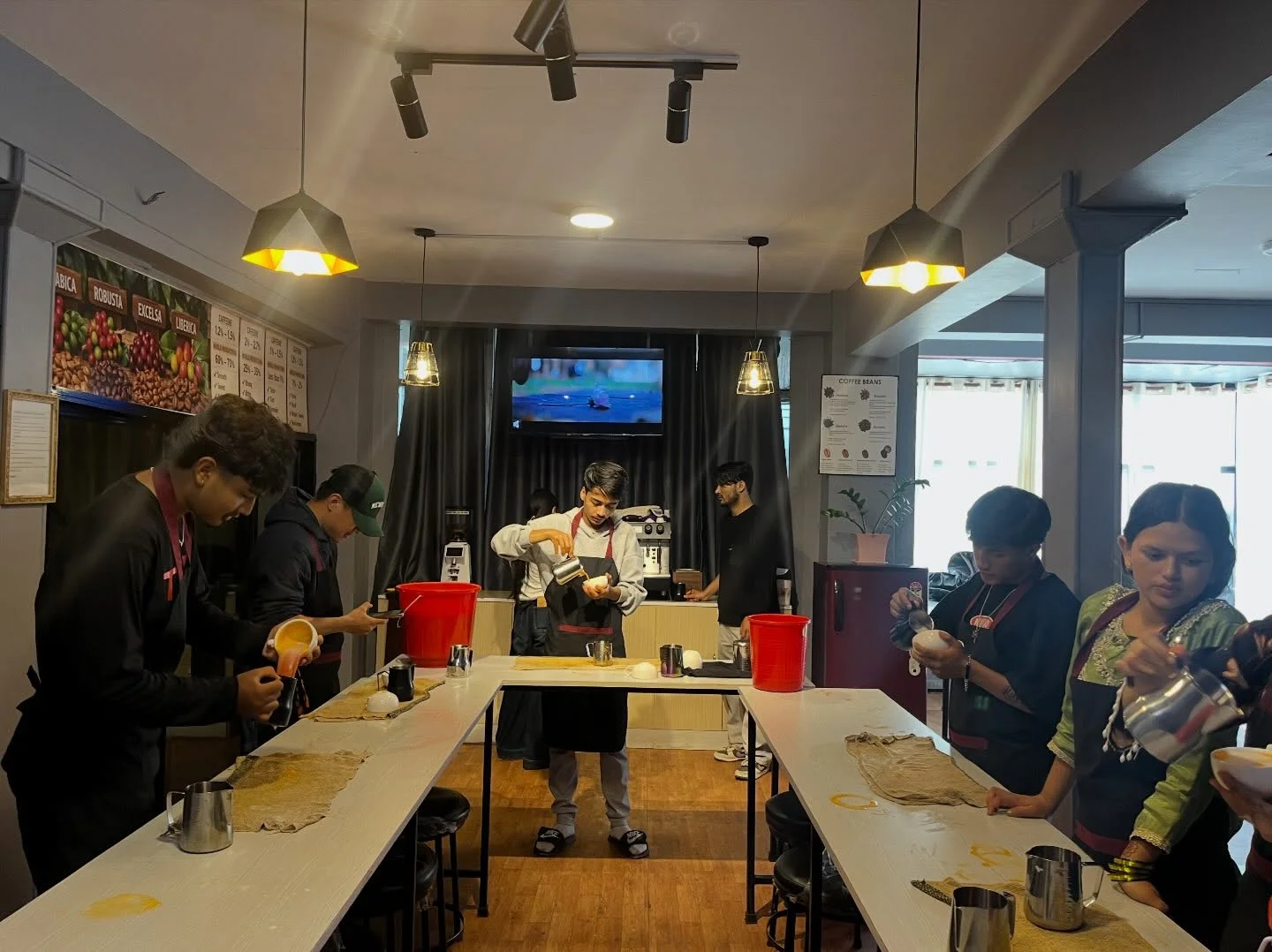
If you're looking for the best barista course in Kathmandu or professional coffee training in Nepal, Brewliners Barista School gives students hands-on experience with the same commercial equipment used in modern cafés.
With training centers in Balaju, Kathmandu, and Lagankhel, Lalitpur, students learn from experienced instructors while working with:
- Commercial espresso machines
- Professional coffee grinders
- Milk pitchers
- Tampers
- Coffee scales
- Brewing equipment
- Latte art tools
- Café accessories
Our practical approach helps students become comfortable using professional equipment before entering the workplace.
Final Thoughts
Every expert barista once held a tamper for the first time.
Every beautiful latte art design started with learning how to steam milk.
Every perfectly balanced espresso began with understanding the grinder.
The tools are important—but it's the skill behind them that creates exceptional coffee.
Whether you're preparing coffee at home or pursuing a career in the hospitality industry, learning to use these essential barista tools is the first step toward becoming a confident coffee professional.
Frequently Asked Questions
What tools does a beginner barista need?
The essentials include an espresso machine, coffee grinder, milk pitcher, tamper, digital scale, knock box, thermometer, cleaning tools, coffee cups, and basic latte art accessories.
Can I learn barista skills without buying all the equipment?
Yes. Joining a professional barista course gives you access to commercial equipment and practical guidance without needing to purchase everything yourself.
Which tool is most important?
The espresso machine and coffee grinder are the foundation of coffee preparation, but developing the skills to use them correctly is even more important.
Where can I learn to use professional barista equipment in Nepal?
Brewliners Barista School provides hands-on training at Balaju, Kathmandu, and Lagankhel, Lalitpur, where students learn using commercial café equipment under the guidance of experienced trainers.