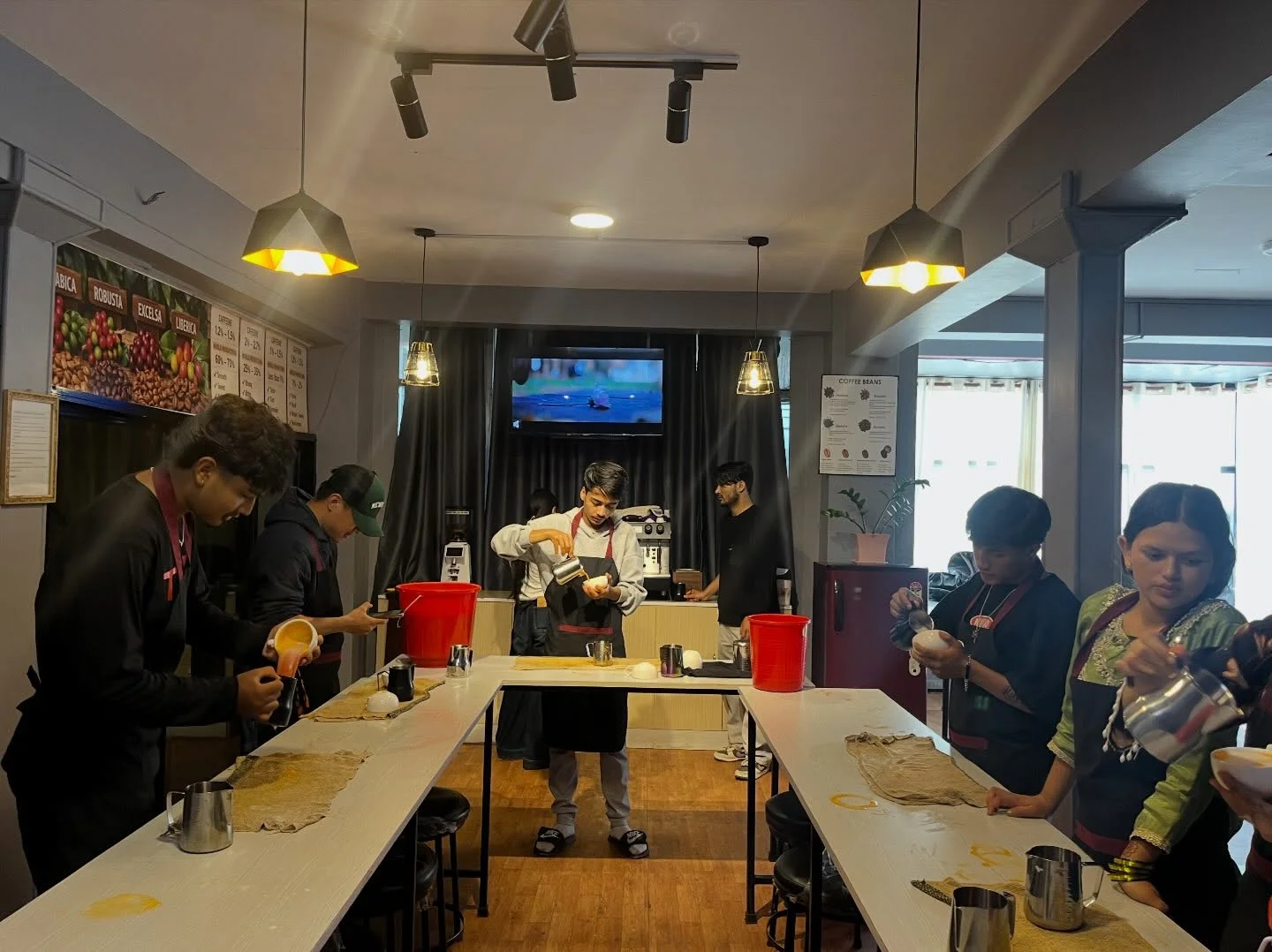
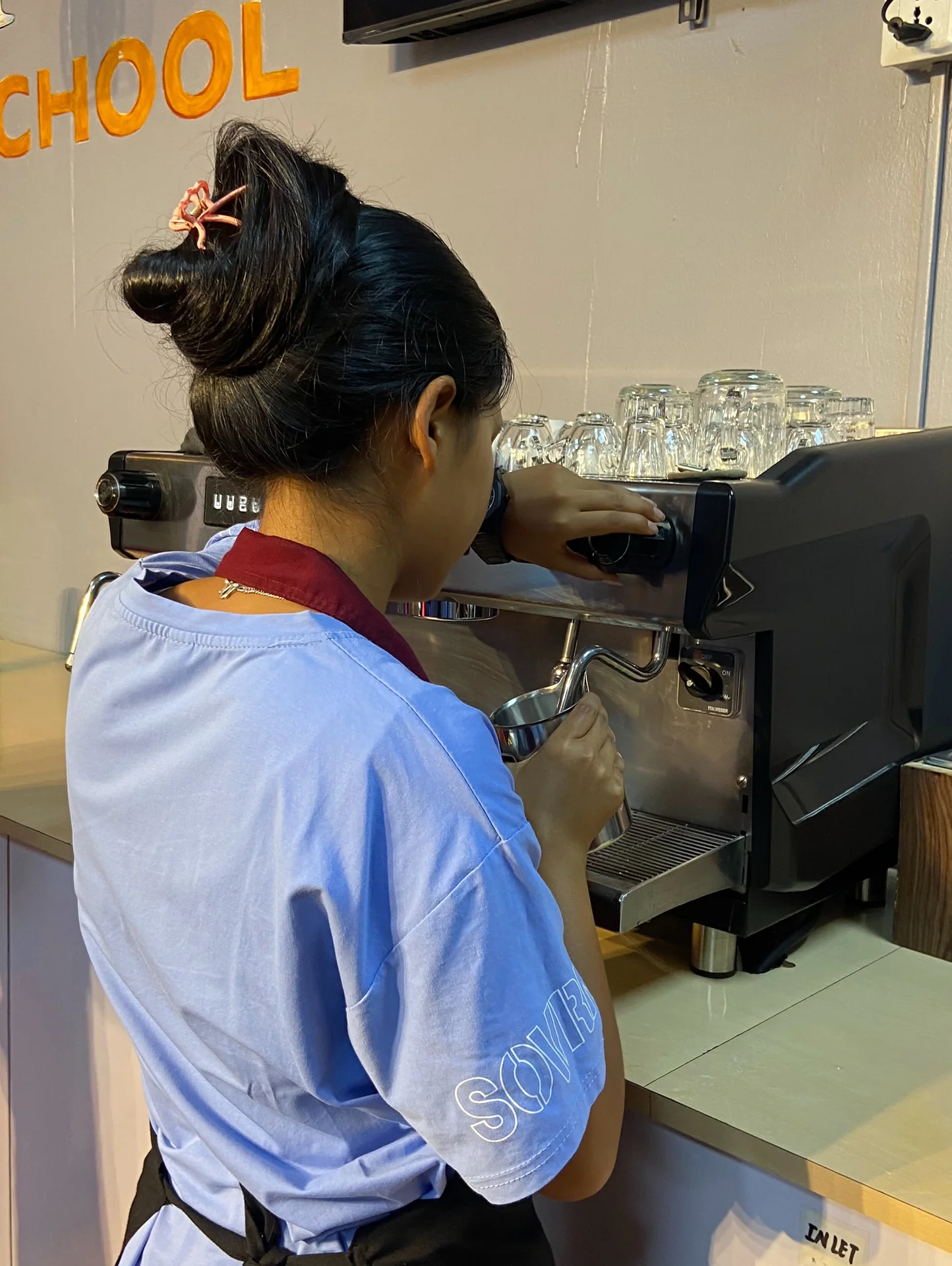
Brewliners Barista School offers practical barista training at Balaju, Kathmandu, and Lagankhel, Lalitpur, where students learn milk steaming, espresso extraction, latte art, and café operations using commercial equipment.
Have you ever wondered why a cappuccino from your favorite café tastes so smooth and creamy, while the one you make at home just doesn't feel the same?
The secret isn't just the coffee—it's the milk.
Perfectly steamed milk transforms an ordinary espresso into a silky latte, a rich cappuccino, or a velvety Flat White. Learning how to steam milk correctly is one of the most important skills every professional barista develops, and it's often what separates a beginner from an experienced coffee professional.
If you're starting your coffee journey or planning to join a barista course in Kathmandu, mastering milk steaming is a skill you simply can't overlook.
Let's explore how professional baristas create café-quality milk every single day.
Why Milk Steaming Matters
Milk isn't just heated—it is carefully textured.
When steamed correctly, milk becomes smooth, glossy, naturally sweeter, and perfectly balanced with espresso.
Proper milk steaming improves:
- Texture
- Sweetness
- Drink presentation
- Latte art
- Overall coffee experience
Every café-quality cappuccino or latte begins with perfectly textured milk.
What Happens When You Steam Milk?
As steam enters the milk, two important things happen:
First, tiny air bubbles are introduced, creating a light, silky foam.
Second, the milk warms evenly, enhancing its natural sweetness and giving it a smooth, velvety texture.
The goal isn't to create large bubbles—it is to create microfoam, a fine, glossy texture that blends beautifully with espresso.
Essential Equipment for Milk Steaming
Professional baristas use a few basic tools to achieve consistent results:
- Commercial espresso machine with a steam wand
- Stainless steel milk pitcher
- Fresh cold milk
- Clean cloth for wiping the steam wand
- Thermometer (optional for beginners)
Using clean equipment is just as important as using the correct technique.
The Basic Steps to Steam Milk
While mastering milk steaming takes practice, the process follows a simple sequence.
Start with Cold Milk
Cold milk gives you more time to texture it properly before it becomes too hot.
Position the Steam Wand Correctly
Keeping the steam wand just below the surface of the milk helps introduce the right amount of air.
Create Microfoam
Instead of producing large bubbles, aim for a smooth, silky texture with tiny, almost invisible bubbles.
Heat Evenly
As the milk warms, continue creating a gentle whirlpool inside the pitcher to blend the foam with the liquid milk.
Finish with a Glossy Texture
Well-steamed milk should look shiny, smooth, and resemble wet paint.
This consistency is ideal for pouring beautiful latte art.
Common Milk Steaming Mistakes
Every beginner makes mistakes while learning.
Some of the most common include:
- Overheating the milk
- Creating large foam bubbles
- Not introducing enough air
- Positioning the steam wand incorrectly
- Using milk that has already been steamed
- Forgetting to clean the steam wand immediately after use
With regular practice, these mistakes become easier to recognize and correct.
Why Microfoam Is So Important
Microfoam is the secret behind professional café drinks.
It creates:
- Smooth mouthfeel
- Better espresso integration
- Beautiful latte art
- Consistent drink quality
- Improved customer experience
Without quality microfoam, even excellent espresso can't reach its full potential.
Milk Steaming and Latte Art Go Hand in Hand
If your dream is to pour hearts, tulips, and rosettas, perfect milk texture comes first.
Latte art isn't about artistic talent alone—it's about creating milk with the right consistency.
Mastering milk steaming lays the foundation for every successful latte art design.
Practice Makes Every Cup Better
Professional baristas spend countless hours refining their milk-steaming technique.
With consistent practice, you'll improve:
- Milk texture
- Pouring control
- Drink consistency
- Speed
- Confidence behind the espresso machine
Every pitcher of milk becomes another opportunity to improve.
Learn Professional Milk Steaming at Brewliners Barista School
If you're searching for the best barista course in Kathmandu or professional coffee training in Nepal, Brewliners Barista School offers hands-on training that prepares students for real café environments.
With campuses in Balaju, Kathmandu, and Lagankhel, Lalitpur, students practice on commercial espresso machines under the guidance of experienced coffee trainers.
Our training includes:
- Espresso extraction
- Professional milk steaming
- Microfoam creation
- Latte art
- Cappuccino and latte preparation
- Coffee brewing methods
- Café workflow
- Equipment care
- Customer service
Whether you're aiming for a career in a specialty café, a hotel, or your own coffee business, Brewliners helps you develop practical skills that employers value.
Final Thoughts
Learning to steam milk is one of the most rewarding parts of becoming a barista.
It's the skill that turns simple ingredients into café-quality drinks and creates the smooth texture customers remember.
Like every aspect of coffee, great milk steaming comes from patience, practice, and attention to detail.
Master this one skill, and you'll be well on your way to preparing exceptional cappuccinos, lattes, and Flat Whites with confidence.
Every beautiful cup begins with perfectly steamed milk.
Frequently Asked Questions
Why is milk steaming important for baristas?
Milk steaming creates the smooth texture and microfoam needed for drinks like cappuccinos, lattes, and Flat Whites. It also enhances sweetness and supports latte art.
What is microfoam?
Microfoam is finely textured steamed milk with tiny, uniform bubbles. It creates a creamy mouthfeel and allows baristas to pour detailed latte art.
Can I practice milk steaming at home?
Yes. If you have an espresso machine with a steam wand, you can practice milk steaming at home. Consistent practice is key to improving texture and control.
Where can I learn professional milk steaming in Nepal?
Brewliners Barista School offers practical barista training at Balaju, Kathmandu, and Lagankhel, Lalitpur, where students learn milk steaming, espresso extraction, latte art, and café operations using commercial equipment.