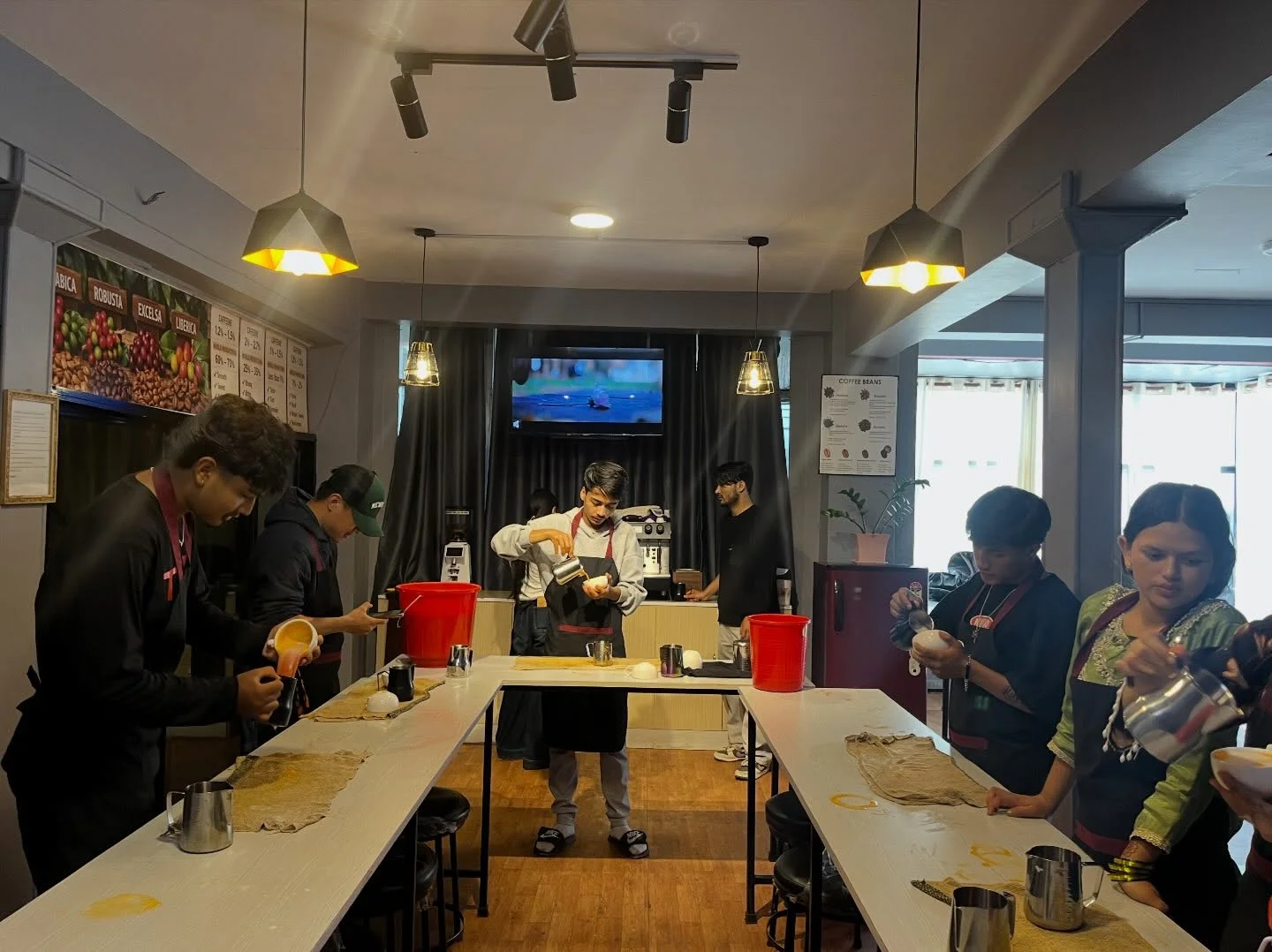
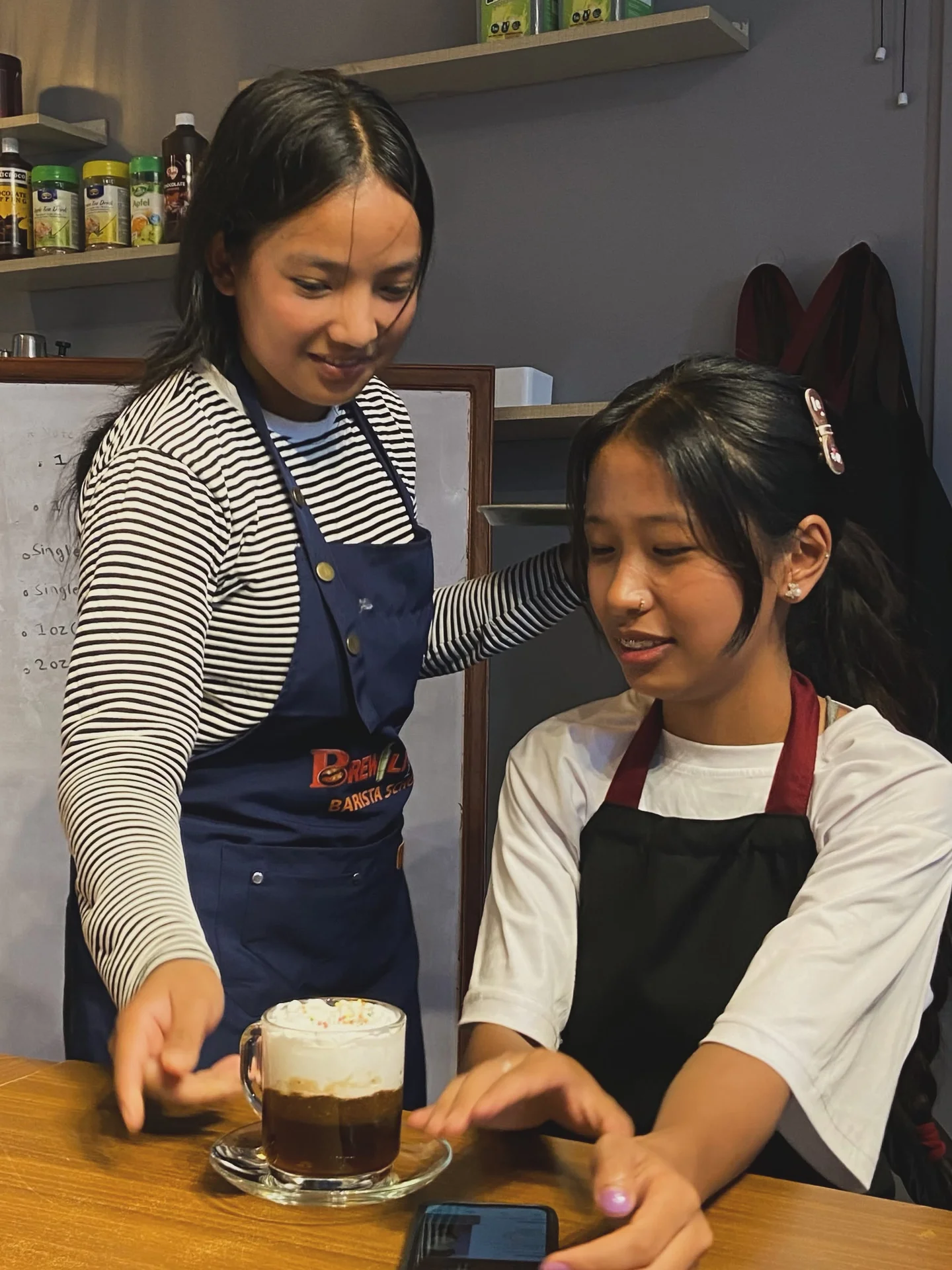
Students receive individual feedback throughout the course, helping them improve quickly and develop confidence before entering the workplace.
Every professional barista has one thing in common.
They've made mistakes.
The perfect espresso shot didn't happen on the first try. The first latte art probably looked nothing like a heart. The milk was overheated, the grinder was adjusted incorrectly, or the espresso flowed too quickly.
The difference between a beginner and an experienced barista isn't that experts never make mistakes—it's that they've learned how to recognize and fix them.
If you're planning to become a professional barista or enroll in a barista course in Kathmandu, understanding these common mistakes will help you improve faster and build confidence behind the coffee bar.
1. Using the Wrong Grind Size
One of the most common beginner mistakes is ignoring the coffee grinder.
If the grind is too fine, espresso can taste bitter and extract too slowly.
If it's too coarse, the coffee may taste weak, sour, and under-extracted.
Professional baristas regularly adjust their grinder to maintain consistent flavor throughout the day.
2. Inconsistent Espresso Extraction
Espresso is the foundation of most café drinks.
Small changes in grind size, coffee dose, or extraction time can dramatically affect flavor.
Learning to recognize balanced espresso is one of the most valuable skills a beginner can develop.
3. Overheating the Milk
Milk should be smooth, creamy, and naturally sweet.
Overheating it can reduce sweetness and create an unpleasant texture.
Professional baristas focus on producing silky microfoam rather than simply making milk hot.
4. Creating Large Foam Bubbles
Many beginners believe more foam is better.
In reality, professional cafés aim for microfoam—tiny, smooth bubbles that blend perfectly with espresso and allow beautiful latte art.
Good milk texture is just as important as good coffee.
5. Poor Tamping Technique
Uneven tamping causes water to flow through the coffee inconsistently.
This can lead to uneven extraction and an unbalanced espresso.
A level, even tamp helps produce better results with every shot.
6. Neglecting Equipment Cleaning
Dirty equipment affects coffee quality.
Old coffee residue, milk buildup, and unclean steam wands can alter flavor and reduce machine performance.
Cleaning should become part of every barista's daily routine.
7. Ignoring Coffee Bean Freshness
Even perfect technique can't fully compensate for stale coffee beans.
Freshly roasted beans preserve more aroma, sweetness, and flavor, resulting in a better overall coffee experience.
8. Rushing Through Drink Preparation
Speed is important in busy cafés—but consistency comes first.
Many beginners try to work too quickly before mastering the fundamentals.
Experienced baristas focus on accuracy first, allowing speed to develop naturally with practice.
9. Forgetting Customer Service
Being a great barista isn't only about making coffee.
Welcoming customers, communicating clearly, and creating a positive café experience are equally important.
Friendly service often leaves as strong an impression as the coffee itself.
10. Not Practicing Regularly
Coffee is a practical skill.
Watching videos and reading guides can help, but real improvement comes from repeated hands-on practice.
Every espresso shot, every pitcher of milk, and every latte art attempt builds confidence and experience.
Mistakes Are Part of Becoming a Better Barista
Every experienced coffee professional has gone through the learning process.
The key is to identify mistakes early, understand why they happen, and keep improving.
With consistent practice, today's mistakes become tomorrow's strengths.
Learn the Right Techniques at Brewliners Barista School
If you're looking for the best barista course in Kathmandu or professional coffee training in Nepal, Brewliners Barista School provides practical, hands-on learning designed to help beginners avoid common mistakes from day one.
With training centers in Balaju, Kathmandu, and Lagankhel, Lalitpur, students gain experience using commercial espresso machines and professional café equipment under the guidance of experienced trainers.
Our training covers:
- Espresso extraction
- Grinder adjustment
- Milk steaming
- Microfoam creation
- Latte art
- Coffee brewing methods
- Machine maintenance
- Café workflow
- Customer service
- Professional café standards
Students receive individual feedback throughout the course, helping them improve quickly and develop confidence before entering the workplace.
Final Thoughts
Every professional barista started as a beginner.
Making mistakes isn't a sign of failure—it's part of the journey toward mastering coffee.
The important thing is to learn from each mistake, practice consistently, and build strong habits from the beginning.
With the right training, guidance, and determination, you'll soon find yourself preparing coffee with confidence, precision, and pride.
Every expert barista was once exactly where you are today.
Frequently Asked Questions
What is the biggest mistake beginner baristas make?
One of the most common mistakes is using the wrong grind size, which can lead to poor espresso extraction and unbalanced coffee.
Why is milk steaming difficult for beginners?
Creating smooth microfoam takes practice. Beginners often introduce too much air or overheat the milk, affecting both texture and taste.
How can I improve my barista skills?
Practice regularly, focus on espresso extraction and milk steaming, maintain clean equipment, and seek guidance through professional hands-on training.
Where can I learn professional barista skills in Nepal?
Brewliners Barista School offers hands-on barista training at Balaju, Kathmandu, and Lagankhel, Lalitpur, helping students master espresso, latte art, café workflow, and professional coffee preparation.