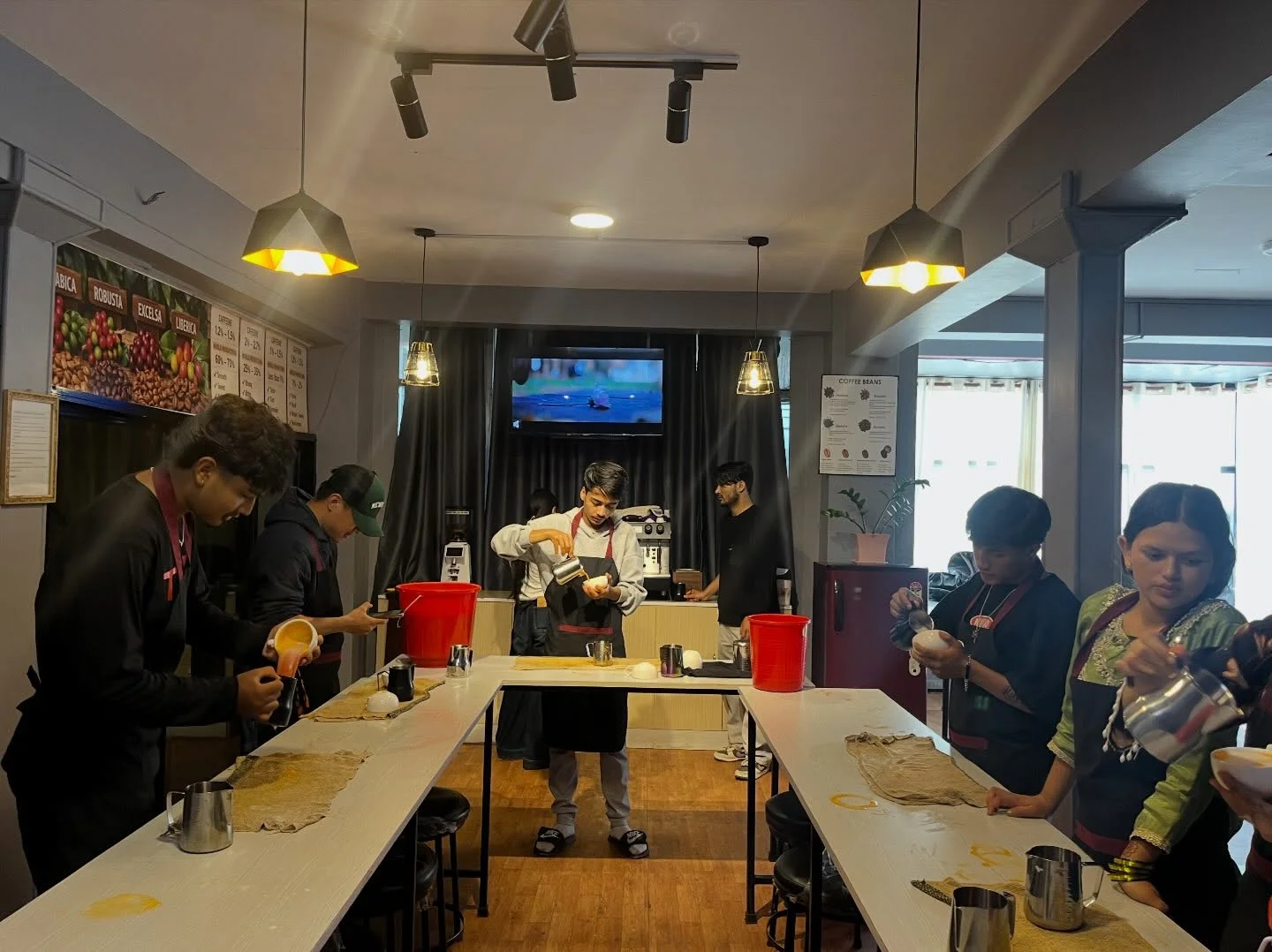
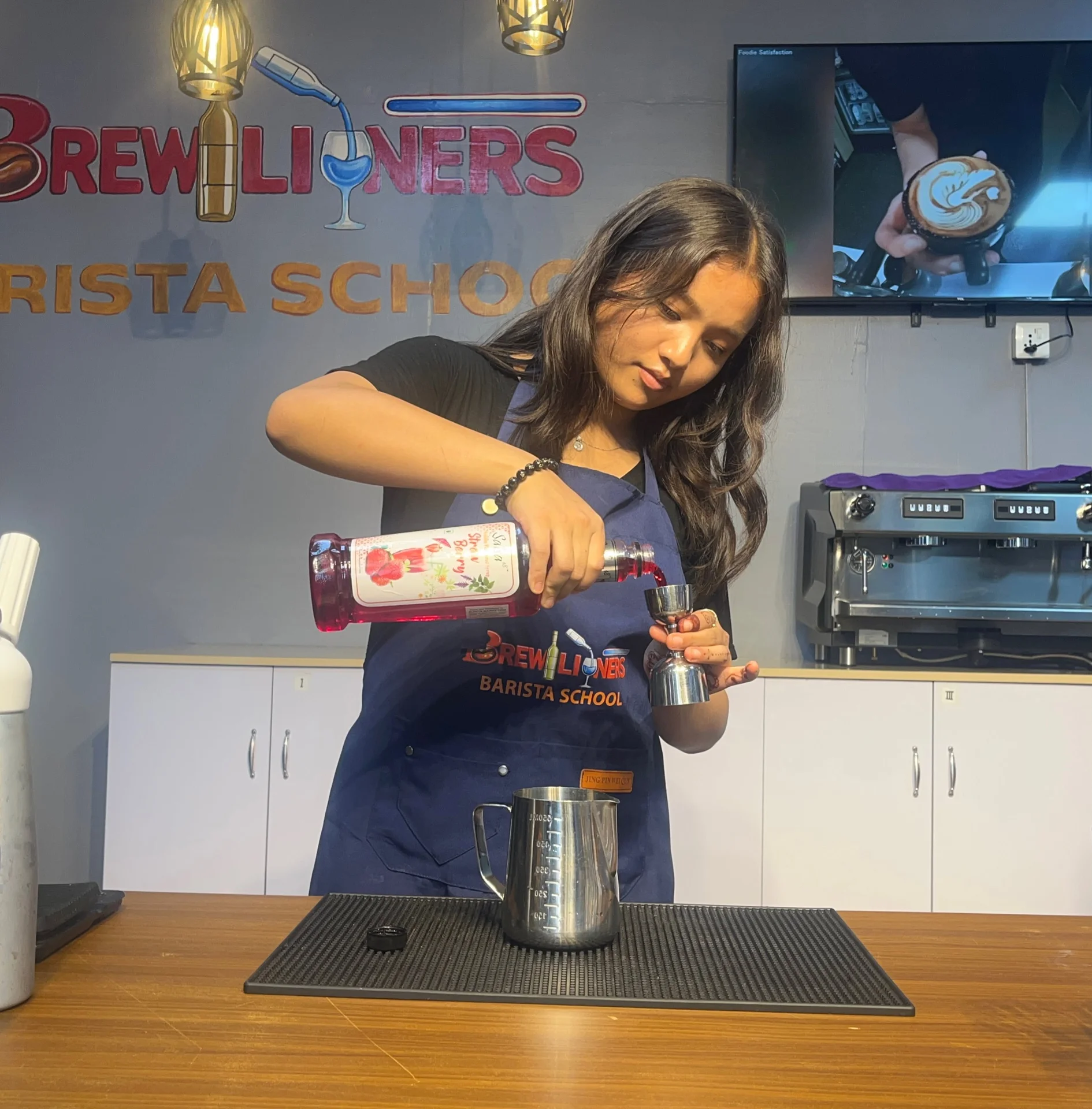
As a café barista, you'll prepare espresso-based drinks, serve customers, maintain coffee equipment, and help create a welcoming atmosphere.
Every great career starts with a single skill.
For many aspiring hospitality professionals, that skill is learning how to craft the perfect cup of coffee.
What begins as a curiosity about espresso, latte art, or specialty coffee can quickly grow into a rewarding career filled with creativity, customer interaction, and opportunities to work in some of the world's most exciting cafés, hotels, and hospitality businesses.
As Nepal's café culture continues to grow, the demand for professionally trained baristas is higher than ever. From independent coffee houses in Kathmandu to international hotel brands, employers are looking for baristas who combine technical coffee skills with excellent customer service.
If you're wondering what career opportunities are available after completing a barista course, this guide will show you how far your coffee skills can take you.
Why Barista Skills Are in High Demand
Coffee is one of the world's most popular beverages, and cafés have become more than places to grab a drink—they're spaces for work, meetings, creativity, and community.
This growth has created strong demand for trained baristas who can:
- Prepare consistent, high-quality coffee
- Operate commercial espresso machines
- Create latte art
- Deliver excellent customer service
- Work efficiently during busy hours
- Maintain café hygiene and equipment
Professional training gives you the practical skills employers look for from day one.
1. Café Barista
The most common career path after completing a barista course is working in a café.
As a café barista, you'll prepare espresso-based drinks, serve customers, maintain coffee equipment, and help create a welcoming atmosphere.
You'll also continue developing your speed, consistency, and communication skills with every shift.
2. Specialty Coffee Barista
Specialty coffee shops focus on premium beans, precise brewing methods, and exceptional customer experiences.
Working in a specialty café allows you to deepen your understanding of coffee origins, brewing science, and advanced extraction techniques.
It's an excellent choice for those passionate about coffee craftsmanship.
3. Hotel Barista
Luxury hotels employ professional baristas to serve guests in restaurants, cafés, lounges, and breakfast areas.
Hotel roles often provide structured career progression, exposure to international guests, and opportunities to work with premium coffee equipment.
4. Restaurant Beverage Specialist
Modern restaurants increasingly offer specialty coffee alongside their dining experience.
Baristas with strong coffee knowledge help maintain beverage quality while enhancing the overall guest experience.
5. Coffee Shop Supervisor
After gaining experience, many baristas move into supervisory positions.
Responsibilities may include:
- Managing daily café operations
- Supporting team members
- Maintaining service standards
- Monitoring stock
- Ensuring customer satisfaction
Leadership skills become increasingly valuable as your career progresses.
6. Café Manager
Café managers oversee the entire operation of a coffee shop.
They handle:
- Staff scheduling
- Inventory management
- Customer service
- Financial performance
- Training new employees
- Business operations
For many professionals, this is a natural next step after several years of café experience.
7. Coffee Trainer
Experienced baristas often enjoy sharing their knowledge with others.
Coffee trainers teach new baristas how to prepare espresso, steam milk, create latte art, and understand café operations.
Training roles combine technical expertise with communication and mentoring skills.
8. Coffee Roastery Assistant
Coffee roasteries employ professionals who help with roasting, quality control, packaging, tasting, and coffee education.
This career path is ideal for those interested in the science behind coffee.
9. Coffee Entrepreneur
Many baristas eventually achieve their dream of opening a café, coffee cart, or specialty coffee business.
A professional barista course provides valuable knowledge of coffee preparation, equipment, workflow, and customer service—skills that form a strong foundation for entrepreneurship.
10. International Hospitality Opportunities
Professional barista skills are valued worldwide.
With experience, language skills, and the appropriate work authorization, trained baristas may find opportunities in:
- International cafés
- Hotels
- Resorts
- Airports
- Cruise ships
- Hospitality brands
Coffee has become a global language, creating opportunities across many countries.
Skills Employers Value Most
Employers look beyond technical coffee skills.
Successful baristas also demonstrate:
- Excellent customer service
- Strong communication
- Teamwork
- Time management
- Professional appearance
- Reliability
- Attention to detail
- Passion for coffee
- Cleanliness
- A willingness to learn
These qualities often determine long-term career growth.
Why Professional Barista Training Makes a Difference
Learning coffee through professional training helps you develop confidence before entering the workplace.
A structured course provides hands-on experience with:
- Commercial espresso machines
- Coffee grinders
- Milk steaming
- Latte art
- Brewing methods
- Equipment cleaning
- Café workflow
- Customer interaction
Practical learning allows students to graduate with job-ready skills rather than just theoretical knowledge.
Build Your Coffee Career with Brewliners Barista School
If you're searching for the best barista course in Kathmandu or professional coffee training in Nepal, Brewliners Barista School offers practical, industry-focused education designed to prepare students for real café careers.
With training centers in Balaju, Kathmandu, and Lagankhel, Lalitpur, students learn using commercial coffee equipment under the guidance of experienced instructors.
Whether your goal is to work in a specialty café, a luxury hotel, or eventually open your own coffee business, Brewliners helps you build the practical skills and confidence needed to succeed.
Final Thoughts
A barista course is more than learning how to make coffee.
It's the first step toward a career built on craftsmanship, hospitality, creativity, and continuous learning.
From local cafés to international hospitality brands, skilled baristas are shaping memorable customer experiences every day.
With the right training, dedication, and passion, your coffee journey can become a rewarding profession.
Your future in coffee starts with one decision—to invest in your skills.
Frequently Asked Questions
What jobs can I get after completing a barista course?
Graduates may work as café baristas, specialty coffee baristas, hotel baristas, restaurant beverage specialists, café supervisors, café managers, coffee trainers, or even start their own coffee business.
Can I work abroad after completing barista training?
Professional barista training provides a strong foundation for international hospitality careers. Opportunities depend on your experience, qualifications, language skills, and visa requirements.
Is being a barista a long-term career?
Yes. Many professionals progress into supervisory, management, coffee training, roasting, quality control, and café ownership roles.
Where can I learn professional barista skills in Nepal?
Brewliners Barista School offers practical, hands-on barista training at Balaju, Kathmandu, and Lagankhel, Lalitpur, preparing students for careers in Nepal and internationally.